PEOPLE AND PLACES

PEOPLE AND PLACES
All over the world in different countries, cultures, tongues, and colors are people who have the same basic desire for happiness and respect from his fellow men. We are the same all over as members of the human race. If we honor each other's boundaries with propriety and consideration our voyage thru life can be rich in knowledge and friendship..........AMOR PATRIAE

Sunday, January 16, 2022


RUSSIA IS RESURRECTING THE MISSILES OF OCTOBER IN A LARGER SCALE


Challenging events are happening above the surface of our oceans. American, Chinese and even Russian naval vessels seem to be getting in each other’s space and causing occasional headlines. There’s also been an intense standoff in space where these superpowers seem to regularly create space debris in the hopes that it will smash up the other side’s massively expensive military satellites. The US had thought it had a lock on precision targetting of satellites. But, China has recently shown that it can match or better this capability.


Like everything else, military hardware is dramatically improving. The Russians are test-firing hypersonic missiles from their Severodvinsk submarines in The Barents Sea. The Chinese recently tested their new hypersonic missiles too. Officially, these are no longer ICBMs, Intercontinental Ballistic Missiles. They are FOBS, or A Fractional Orbital Bombardment System which involves sending missiles through a partial orbit around the earth to strike targets from an unexpected direction. General Milley, Chairman of the Joint Chiefs, responded to the recent FOB test calling it a “Sputnik moment” for America. China’s hypersonic weapon circumnavigated the whole globe recently for the first time. In response, the American Ambassador to the Conference on Disarmament in Geneva said, “We just don’t know how to defend against that technology, neither does China, neither does Russia.” The point is that we had ten days to save the world when the US and Russia stood on the brink of a nuclear exchange in 1962 during the Cuban Missile Crisis. Today missile systems are so fast, and increasingly automated. Will we even have minutes, let alone days?

Luckily, most nations do not want anything like that to happen. The old warfare was about damaging an opponent’s hardware before it could do any damage. The new warfare is about denial of use. It’s about damaging access to the digital operating space by disrupting access to WIFI, GPS and Sat Nav. But, that has untold consequences for civilian life we should all be thinking about.


Further complicating matters, the Superpowers seem to have spent the last decade pushing militaries themselves off-balance sheet. The debt problem has led to the privatization of militaries. We may have more mercenaries funded by governments today than at any time in history. The Russians have done the same, perhaps for other reasons. Plausible deniability is valuable in a world where conflict is remote and subthreshold. Private American and Russian mercenaries and Chinese "contracters” seem to be all over Africa, the Middle East and Asia these days. It has become nearly impossible to disentangle the role of the state and private military organizations in this new era of competition, confrontation and sub-threshold conflict.

The militaries of the superpowers have re-established strong lines of communication amongst themselves, even if the superpower leaders have not. President Biden is begging for a hotline to Beijing; however, Premier Xi Jinping seems to prefer speaking directly to CINCPAC, the Commander in Chief, US Pacific Fleet. Putin opts to send warnings about not “crossing any red lines” to the US military through the media. Most certainly, what the militaries say to each other, often without words but with weapons, might not translate into understanding amongst the general public.

When nations are nose-to-nose, but the public doesn’t know, the risk is that we get caught by surprise.

Historians will look back and be surprised that we were surprised. Isn’t that always the case?

WWIII may feel benign because it is silent, because it is digital, because it is occurring far away and without civilian involvement. Investors have priced geopolitical risk at zero. Until the public awakens to the true situation, the enormous gap between those who are in the know and those who don’t know is a danger to everyone’s future.
Russia will not drop a demand that NATO “be rolled back” to its 1997 boundaries, according to a senior Russian envoy, a requirement backed by the threat of “a large-scale conflict in Europe” arising out of Ukraine.


“We are not bluffing,” Russian Deputy Foreign Minister Sergei Ryabkov said Monday, per state-run TASS. “These are our real proposals. The West’s awareness of this needs to be facilitated, and we are going to make every effort to achieve it.”

Russian President Vladimir Putin has amassed military forces around Ukrainian borders, ostensibly due to the dangers presented by Ukraine joining NATO at some future date. Putin’s team, which oversaw the annexation of Crimea and the invasion of eastern Ukraine in 2014, portrays the latest round of tensions a consequence of NATO expansion over the last 25 years, raising the prospect of a major war in Europe.


“It is important to lower the degree of confrontation caused by the way our U.S. colleagues are looking after their Ukrainian proteges,” Russian Foreign Minister Sergey Lavrov said in an interview published Sunday. "The course on dragging Kyiv into NATO with the prospect of deploying attack missile systems near our borders creates unacceptable threats to Russia’s security, thus provoking serious military risks for all parties involved, up to a large-scale conflict in Europe.”

Ukrainian President Volodymyr Zelensky wants to join NATO, but that process has been stalled for nearly two decades. President Joe Biden said in July that "it remains to be seen” whether Ukraine ever will “meet [the] criteria” for membership in the trans-Atlantic alliance, but Russian officials want NATO to close the door on the idea.

“We would like to emphasize that the nonexpansion of NATO and preventing the deployment of weapons systems near the Russian border that threaten Russia’s security will be front and center during the upcoming talks with the United States and NATO,” Russian Foreign Affairs Ministry spokeswoman Maria Zakharova said Saturday. “This is something those who until now have been unable to grasp Russia’s position must understand.”


NATO leaders agreed in 2008 that Georgia and Ukraine should have the option at some point of joining the alliance, but Russia has invaded both of those countries in the intervening years, creating territorial disputes that short-circuit using the trans-Atlantic alliance’s collective defense guarantee to avert a conflict.

"Yet the Kremlin has, in effect, exercised ... a veto,” former U.S. Ambassador to Ukraine Steven Pifer wrote in October. “Allies appear unenthusiastic ... because there is no good answer to the question ‘if Ukraine joins NATO tomorrow, does the alliance then find itself at war with Russia?’”

Putin has sought to pose that question even in the absence of any serious progress toward Ukrainian membership in NATO.


“We demand an official withdrawal of the decision made at the 2008 Bucharest summit relating to Ukraine and Georgia’s [intentions] to join NATO,” Ryabkvo said. “When we say that further expansion of NATO needs to be prevented, when we say that NATO facilities and all kinds of activities that are provocative for Russia need to be rolled back to the positions that existed in 1997 when the NATO-Russia Founding Act was signed, we are not bluffing.”

Russia warns of potential ‘large-scale conflict in Europe’
Russia's top diplomat believes that US-NATO missiles near the Russian border would increase tension and worsen the risk of escalation.


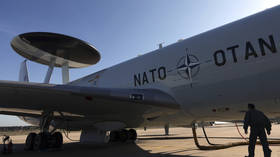
FILE PHOTO. © REUTERS / Francois Lenoir


Ukraine’s possible accession to NATO poses “unacceptable threats” to Moscow, including the possibility that missile defense systems could be placed directly on the Russian border, the country’s foreign minister said on Friday.

Speaking to Bosnian newspaper Oslobodjenje, Sergey Lavrov said that all parties need to reduce the “degree of confrontation” caused by American officials and their work with their “Ukrainian protégés.”

“The policy of dragging Kiev into NATO with the prospect of missile strike systems appearing near our borders poses unacceptable threats to Russian security, provoking serious military risks for all parties involved, up to and including large-scale conflict in Europe,” he said.

Lavrov’s comments to the Bosnian outlet come as relations between Russia and the US-led military bloc remain at a crisis point.

The recent uptick in tensions follows reports that Moscow is massing troops on the Ukrainian border, with some Western media outlets suggesting an invasion is around the corner. NATO has repeatedly warned Russia that it is preparing a set of sanctions that would be imposed if any military action is taken.

Earlier this week, at an expanded meeting of the Ministry of Defense, Russian President Vladimir Putin explained that, if NATO infrastructure appeared in Ukraine, it would only take 7-10 minutes for a missile to reach Moscow, stressing that this was “a serious challenge for Russia.”

Last Friday, Moscow pitched a list of proposals to the US and NATO in the form of two draft treaties. The documents consist of a list of security guarantees, including a demand that NATO won’t expand eastwards into states that were formerly a part of the USSR. If signed, it would also see troop movements near the Russian border be limited and prevent missiles from being placed near the frontier.

Friday, December 24, 2021


The US Navy fired the leaders of the attack submarine that ran into a Chinese made  drone

Seawolf-class attack submarine USS Connecticut in the Pacific Ocean on November 17, 2009. US Navy/MCS1 John M. Hageman
  • The Navy sacked three command leaders of the attack submarine USS Connecticut.

  • The decision follows an incident last month in which the submarine crashed into an underwater mountain.

  • The commander of 7th Fleet determined the accident was preventable.

The command leadership of the attack submarine USS Connecticut were fired after an incident in the South China Sea early last month.

Vice Adm. Karl Thomas, who commands the US Navy's 7th Fleet, decided to relieve the nuclear-powered Seawolf-class attack submarine's commanding officer, Cmdr. Cameron Aljilani, as well as Lt. Cmdr. Patrick Cashin, the executive officer, and Master Chief Sonar Technician Cory Rogers, the chief of boat, due to loss of confidence on Thursday, the Navy said in a statement.

The decision comes just over a month after the submarine grounded on a seamount, which is to say it collided with an underwater mountain.

The Navy first reported on Oct. 7 that five days earlier the Connecticut struck an unidentified object.

The Navy statement offered few details, providing only that the submarine struck something while operating in international waters, there were no life-threatening injuries, the submarine was in stable condition, and the nuclear-propulsion systems were not damaged.


Though the Navy did not publicly disclose the location of the incident, defense officials speaking on the condition of anonymity revealed to some reporters after the release of the statement that it happened in the South China Sea. Officials also said that there were damages and that a dozen crew members were injured.

As of last Wednesday, the US Navy was not quite sure what the submarine hit, though defense officials told USNI News that early indications suggested that the Connecticut crashed into a Chinese drone.


The 7th Fleet announced that the command investigation into the incident "determined USS Connecticut grounded on an uncharted seamount while operating in international waters in the Indo-Pacific region."

That investigation was then passed to Thomas for accountability considerations.

After reviewing the investigation, the commander concluded that "sound judgement, prudent decision-making and adherence to required procedures in navigation planning, watch team execution and risk management could have prevented the incident," a 7th Fleet statement said Thursday.

The Connecticut, one of only three powerful Seawolf-class attack submarines built to hunt enemy submarines in deep waters, is currently in Guam undergoing a damage repair assessment before it returns to Bremerton, Washington for more extensive repair work.

The Navy said in its statement that Capt. John Witte will be taking over as the interim commanding officer, while Cmdr. Joe Sammur and Command Master Chief Paul Walters will assume the duties of interim executive officer and interim chief of the boat.

US AND RUSSIAN SUBMARINES

Russia's armament program through 2020 envisages the construction of six new Yasen-class submarines, armed with eight vertical silos for cruise missiles and ten torpedo tubes

Project 885 Yasen-class fourth-generation nuclear submarine

TASS-FACTBOX. March 31, 2017. The Sevmash Shipyard in Severodvinsk in northern Russia has floated out the second Project 885 Yasen-class nuclear submarine Kazan.


The Project 885 (08850) Yasen-class fourth-generation multipurpose nuclear submarine was developed in the 1990s by the St. Petersburg-based Malakhit Design Bureau of Maritime Machine-Building under the direction of Chief Designer Vladimir Popov. The submarine is based on the Projects 705(K) Lira and 971 Shchuka-B. Sevmash, which is located in Severodvinsk in the Arkhangelsk Region and is part of the United Ship-Building Corporation, is the shipyard engaged in the construction of Yasen-class submarines.


Project 885 Yassen class fourth-generation Kazan nuclear sub was launched Friday Severodvinsk in Russia
It's been under construction since 2009 ahead of being released to the Northern Russian Fleet ready for 2018
Submarine is about 139m long and about 13m wide and has a draft of 10m which allows it to launch missiles
Missiles will be able to hit East US Coast from the middle of Atlantic in a throwback to Soviet muscle-flexing


Russia has launched its most powerful submarine ever which is said to be capable of blasting nuclear warheads at targets 1,500 miles away on land.
The Project 885 Yassen class fourth-generation Kazan nuclear submarine has been under construction since 2009 ahead of its launch on Friday Severodvinsk in northern Russia.
The high-tech vessel is said to be a throwback to the Soviet era and will be able to hit the East Coast of America from the middle of the Atlantic.


+10
The monster submarine is launched at the Sevmash shipyard in northern Russia ahead of it going live sometime in 2018


Crew members at the launching of the Kazan, a Project 885M Yasen-class nuclear-powered multipurpose attack submarine, at the Sevmash shipyard


These crew members in their snow-covered traditional uniform will be part of the personnel on board when the submarine is launched


The massive submarine, which measures in at 139m long and about 13m wide and has a draft of 10m will be in active service by 2018


The submarine, pictured here during its launch to sea, is to join the Russian Northern Fleet and will be one of seven similar submarines

What is Russia's new submarine armed with?


The sizey submarine displaces 8,600 tonnes in its surface position and up to 13,800 tonnes in its underwater position
The Project 885 submarine is about 139m long and about 13m wide and has a draft of 10m.
The submarine displaces 8,600 tonnes in its surface position and up to 13,800 tonnes in its underwater position.
It can submerge to a maximum depth of 600 meters and develops a speed of 16 knots in its surface position and up to 31 knots in its underwater position.
The submarine has a sea endurance of 100 days and a crew of 85-90 men.
It is equipped with a single-shaft steam turbine nuclear power unit with a capacity of about 43,000 hp.
The submarine’s OK-650V water-cooled and water-moderated reactor has a thermal capacity of 190 MW (modernized Project 885M submarines will be outfitted with a power unit of over 200 MW).
The Project 885 submarine is armed with eight vertical silos for Oniks and Kalibr cruise missiles, ten 533mm torpedo tubes with an ammunition load of 30 torpedoes each.
Submarines of this type can be eventually armed with new Kh-101 (Kh-102) cruise missiles and universal deep-water homing torpedoes.
It was launched in the Sevmash Shipyard and the yard’s deputy CEO Mikhail Budnichenko ordered the sub’s commander Captain Aleksandr Beketov to pop a bottle of champagne over the hull, according to the state-sponsored TASS News Agency.
Among the dignitaries were Deputy Prime Minister Dmitry Rogozin and the Navy’s commander Vladimir Korolyov, who said: 'The launch of an advanced multi-role submarine of the improved project Yasen-M is quite an event for the whole of the country, its armed forces and its Navy. We are working together on a plan approved by the government.
'We are in the process of creating a submarine group capable of coping with missions around the world and maintaining Russia’s security.'
The new-generation Kazan has was being built at the Sevmash shipyards and is to be handed over to the Russian Northern Fleet in 2018.
By 2023 there will be seven in active service.


+10
Huge crowds gather for the launch of the sub in the Sevmash Shipyard in Severodvinsk in northern Russia and the yard’s deputy CEO Mikhail Budnichenko ordered the sub’s commander Captain Aleksandr Beketov to pop a bottle of champagne over the hull


+10
A construction worker wearing a blue helmet and a black and orange jacket walks over the snow-dusted ground at the shipyard during the launch


+10
A priest at the launching of the Kazan, a Project 885M Yasen-class nuclear-powered multipurpose attack submarine, at the Sevmash shipyard
The newly-launched fourth-generation sub will out-fire its current fleet in the Black Sea by more than 50 percent.
Russia has a Black Sea Fleet of at least ten ships headed by a Slava class guided missile cruiser in eastern Mediterranean waters, which provide logistics and an air defence 'umbrella' over Latakia and Tartus regions.
It includes a diesel electric submarine known as the Rostov-on-Don, which launched Kalibr cruise missiles against targets near the Syrian city of Raqqa, ISIS's de facto capital on November 17.
Commissioned in late December 2014, the submarine is a Project 636 Varshavyanka sub deemed to be one of the quietest in the world.

The stealth submarine is so advanced it is dubbed the 'black hole' because it is so hard to detect. It is the second submarine out of six planned for the Black Sea Fleet by the end of 2016.
It is backed up by Buyan-M class warships - four of which launched a barrage of 26 cruise missiles which blitzed ISIS targets located more than 930 miles away.
Each Buyan-class ship carries eight 3M-54K cruise missiles - known as 'Sizzlers' - which are 27ft long and carry a 450kg warhead.
The missile system is designed to destroy submarines, other 'surface vessels' and 'slow moving targets whose coordinates are known in advance'.
The rockets have a range of up to 410miles.
Russian submarines have increased combat patrols to the level last seen during the Cold War, the navy chief said today.
Admiral Vladimir Korolyov said Russian submarine crews spent more than 3,000 days on patrol last year, matching the Soviet-era operational tempo.
Last week, Russian President Vladimir Putin's top spokesman said the relationship between the US and Russia may be more antagonistic now than it was during the decades-long Cold War.
Asked by ABC's 'Good Morning America' host George Stephanopoulos if the US and Russia were in a 'new Cold War,' Dmitry Peskov said the current situation may be worse, pinning the blaming on the US.
He said: 'New Cold War? Well, maybe even worse.
'Maybe even worse taking into account actions of the present presidential administration in Washington.'


Russian submarines have increased combat patrols to the level last seen during the Cold War. Pictured is the Yuri Dolgoruky, is seen during sea trials near Arkhangelsk, Russia


Admiral Vladimir Korolyov said Russian submarine crews spent more than 3,000 days on patrol last year, matching the Soviet-era operational tempo
The Russian military had fallen on hard times after the 1991 Soviet collapse when it was forced to scrap many relatively new ships and keep most others at harbour for lack of funds.
The military has revived its strength thanks to a sweeping arms modernization program amid tensions with the West over Ukraine.
Mr Korolyov spoke after attending the launch of a new Yasen-class nuclear-powered attack submarine called the Kazan.
He hailed the new ship as the most modern in the world, emphasizing its low noise level making it hard to track it.
'It represents the cutting edge of nuclear submarine design,' Mr Korolyov said in televised remarks.
The navy plans to commission seven Yasen-class submarines that are armed with torpedoes and long-range Kalibr cruise missiles, which for the first time have been tested in combat during the Russian campaign in Syria.


The Project 885 Yasen-class submarine is designed to destroy an enemy’s submarines and surface ships, naval bases, ports, naval task forces and other targets. The Yasen-class submarine’s one-and-a-half hull design (the outer hull giving the submarine its streamlined shape is present only in its forepart).
Submarine’s performance characteristics

According to public sources, the Project 885 submarine is about 139 meters long and about 13 meters wide and has a draft of 10 meters. The submarine displaces 8,600 tonnes in its surface position and up to 13,800 tonnes in its underwater position. It can submerge to a maximum depth of 600 meters and develops a speed of 16 knots in its surface position and up to 31 knots in its underwater position. The submarine has a sea endurance of 100 days and a crew of 85-90 men. It is equipped with a single-shaft steam turbine nuclear power unit with a capacity of about 43,000 hp. The submarine’s OK-650V water-cooled and water-moderated reactor has a thermal capacity of 190 MW (modernized Project 885M submarines will be outfitted with a power unit of over 200 MW).
The Project 885 submarine is armed with eight vertical silos for Oniks and Kalibr cruise missiles, ten 533mm torpedo tubes with an ammunition load of 30 torpedoes each. Submarines of this type can be eventually armed with new Kh-101 (Kh-102) cruise missiles and universal deep-water homing torpedoes.
Submarine series
The Project 885 lead submarine K-560 Severodvinsk (Factory No. 160) was laid down at the Sevmash Shipyard on December 21, 1993, floated out on June 15, 2010, delivered to the Russian Navy for operational evaluation on December 30, 2013 and made operational in the Northern Fleet on June 17, 2014.


The other submarines of this series are being built under the modernized Project 885M (08851) Yasen-M. They are characterized by the optimized hull shape and upgraded electronic warfare and automation systems.
A contract for the construction of a submarine with Factory No. 161 was signed between Russia’s Defense Ministry and the Sevmash Shipyard on December 6, 2005. The construction of five submarines of this series with Factory Nos. 162-166 is stipulated by a contract of November 9, 2011 concluded with the United Ship-Building Corporation.
The second submarine, the K-561 Kazan (Factory No. 161), was laid down on July 24, 2009, floated out on March 31, 2017 and is expected to be delivered to the Russian Navy in 2018.
The third submarine, the K-573 Novosibirsk (Factory No. 162), was laid down on July 26, 2013 and is scheduled to be delivered to the Navy in December 2019.
The fourth submarine, the K-571 Krasnoyarsk (Factory No. 163), was laid down on July 27, 2014 and is expected to be delivered to the Navy in December 2020.
The fifth submarine, the K-564 Arkhangelsk (Factory No. 164), was laid down on March 19, 2015 and is expected to be delivered to the Navy in December 2021.
The sixth submarine Perm (Factory No. 165) was laid down on July 29, 2016 and is expected to be delivered to the Navy in December 2022.
The state armament program through 2020 envisages the construction of six Yasen-class submarines. Another underwater cruiser, the Ulyanovsk (Factory No. 166), is expected to be laid down in July 2017 and delivered to the Navy in 2023.


Which is the best attack submarine in the world? Which is the greatest and deadliest modern attack submarine and why? Our Top 10 analysis is based on the combined score of offensive weapons, stealthiness, and some other features.
The main mission for this type of boats is to engage hostile submarines and ships. It must have good sonar in order to detect enemy submarines. Also it is extremely important for these boats to approach enemy boats and warships undetected. After engagement it is even more important to leave the area undetected by hostile anti-submarine ships and maritime patrol aircraft. Some of the latest attack submarines can launch cruise missiles against ships and land targets. So stealthiness and armament are the main factors deciding which attack submarine is the best.
This list only includes nuclear-powered attack submarines, that are currently in service around the world. Boats that are still being developed or are under construction are not present here.
Currently top 10 attack submarines in the world are these:


Nr.1 Seawolf class (USA)


Entered service: 1997
Diving depth: 487 m
Torpedo tubes: 8x660-mm
Weapons: Mk.48 torpedoes, Sub-Harpoon anti-ship missiles and Tomahawk cruise missiles

The boats of the Seawolf class are the most advanced but also the most expensive hunter-killer submarines in the world. These submarines were intended to restore the technological edge which the US Navy had enjoyed over the Soviets from 1945 until the mid-1980s, when espionage and the cynical trading practices of some US allies somewhat eroded it. The Seawolf class boats were intended to seek and destroy the latest Soviet ballistic missile submarines, such as the Typhoon classand attack submarines such as the Akula class.

Initially 12 boats of the class were planned. However these advanced submarines were too pricey even for the United States to build and maintain on the post-Cold War era budget. Eventually production was stopped with only three Seawolf class submarines built. All of these boats are currently in service. The US Navy switched to much cheaper design of Virginia class attack submarines.
The Seawolf class submarines are arguably the quietest submarines in the world ever constructed. It is exceptionally quiet even at high speeds. Most submarines need to keep their speed down to as little as 5 knots to avoid detection by passive sonar arrays, while the Seawolf class are credited with being able to cruise at 20 kots and still be impossible to locate. A Seawolf at 25 knots makes less noise than an older Los Angeles class submarine tied up alongside the pier.
These boats can operate at greater depths than existing US submarines and can also operate under the polar ice cap. Also these are faster than most other submarines.
These submarines have eight 660-mm torpedo tubes. These tubes are used to launched Mk.48 torpedoes and Sub-Harpoon anti-ship missiles. Torpedo tubes are also used to launch Tomahawkland attack cruise missiles with a range of 1 700 km. A mix of 50 torpedoes, Sub Harpoons and Tomahawks can be carried.


Nr.2 Virginia class (USA)


Entered service: 2004
Diving depth: over 250 m
Vertical launched tubes: 12
Torpedo tubes: 4x533-mm
Weapons: Mk.48 torpedoes, Sub-Harpoon anti-ship missiles, Tomahawk cruise missiles.

The US Navy's Virginia class nuclear-powered attack submarine is as a successor to the Los Angeles class boats. It was designed as a smaller, cheaper and more versatile alternative to the advanced but extremely expensive Seawolf class. A total of 30 of Virginia class nuclear-powered attack submarines are planned. The Virginia class submarines incorporate newly designed anechoic coating, isolated deck structures and new design of propulsor to achieve low acoustic signature. It is claimed that noise level of the Virginia is equal to that of the Seawolf class.
The Virginia class submarines are fitted with 12 vertical launch system (VLS) tubes. These are used to launched Tomahawk land attack cruise missiles with a range of 1 700 km. Also there are four 533-mm torpedo tubes. These are used to fire a total of 26 Mk.48 heavyweight torpedoes and Sub-Harpoon anti-ship missiles.

These boats can be also used for special operations. It is the first US submarine to employ a built-in Navy SEAL staging area allowing a team of 9 men to enter and leave the submarine.


Nr.3 Astute class (United Kingdom)


Entered service: 2010
Diving depth: over 150 m
Torpedo tubes: 6x533-mm
Weapons: Spearfish torpedoes, Sub-Harpoon anti-ship missiles, Tomahawk cruise missiles.

The first Astute class nuclear-powered attack submarine was commissioned with the Royal Navy in 2010. So far 7 boats of the class are planned. These will replace the older Swiftsure class attack submarines. The Astute class boats are significantly stealthier and carry more weapons than the previous boats of Trafalgar class.
These attack submarines are fitted with six 533-mm torpedo tubes. These are used to launch Spearfish torpedoes, Sub-Harpoon anti-ship missiles and Tomahawk cruise missiles. A mix of 36 missiles and torpedoes are carried.

The Tomahawk Block IV land attack cruise missiles have a range of 1 700 km and can target enemy ships as well as land targets.


Nr.4 Graney class (Russia)


Entered service: 2013
Diving depth: ~ 300 m
Vertical launch tubes: 24
Torpedo tubes: 8x650-mm
Weapons: various torpedoes, anti-ship and cruise missiles.

The Project 885 Yasen (NATO designation Graney class) is the latest Russian nuclear-powered attack submarine. The lead boat, Severodvinsk, was laid down in 1993 however the project was stopped due to funding problems. It was commissioned with the Russian Navy only in 2013. The second boat of the class is built to improved project. Currently at least 6 of these boats are planned. These will become a successor to the older Akula class submarines. Despite all improvements the Graney class boats are only slightly quieter than improved Akula class boats.

The Severodvinsk has 24 vertical launch tubes for various cruise missiles. Cruise missiles include the P-800 Oniks (SS-N-26), which has a range of about 300 km.
Also there are eight 650-mm torpedo tubes for torpedoes and anti-ship missiles. It is reported that a total of 30 torpedoes and anti-ship missiles are carried.


Nr.5 Sierra II class (Russia)


Entered service: 1992
Diving depth: ~ 400 m
Torpedo tubes: 4x650-mm, 4x533-mm
Weapons: Torpedoes, SS-N-15 Starfish or SS-N-16 Stallion anti-submarine missiles, SS-N-21 Samson cruise missiles

The Russian expensive Sierra I and Sierra II class boats succeeded the ill-fated Alfa class. These boats have two light and strong titanium hulls. These submarines can operate at great depths and provided reduced radiated noise levels as well as increased resistance to damage of torpedo attacks.

Soviet titanium technology was far in advance of the West, requiring fewer passes to achieve a successful weld, but the cost of the hulls limited the numbers built, despite advantages in depth and underwater speed.
The Russian Navy maintains these advanced submarines despite their high operating costs.


Entered service: 1988
Diving depth: 450 m
Torpedo tubes: 4x533-mm
Weapons: Mk.48 torpedoes, Sub-Harpoon anti-ship missiles and Tomahawk land attack cruise missiles.

The US Navy currently operates a total of 40 older Los Angeles class submarines alongside the newer Seawolf and Virginia classboats. These submarines proved to be an exceptionally good ASW platform. First boat of the improved Los Angeles class was commissioned in 1988. Improved submarines are much quieter. It is described that improved Los Angeles class boats are 7 times quieter than the original Los Angeles class boats.
The class features a very potent weapon array, including Mk.48 torpedoes, Sub-Harpoon anti-ship missiles and Tomahawk land attack cruise missiles. Tomahawk missiles can be launched from torpedo tubes of from dedicated vertical launching systems.

These boats can operate under ice where the Russian ballistic missile submarines tend to hide.


Nr.7 Akula class (Russia)


Entered service: 1986
Diving depth: ~ 300 m
Torpedo tubes: 4x650-mm, 4x533-mm
Weapons: torpedoes and missiles

In the late 1980s Soviet Union launched a number of Akula class boats. The Akula class marked a significant improvement in Soviet submarine design as it is far quieter than and earlier SSNs. Furthermore it was far quitter than Western countries expected. The use of commercially available Western technology to reduce noise levels played an important role in this eroding a long-held NATO advantage in the underwater Cold War. Improved Akula II class boats became the first Russian submarines that were actually quieter than the latest US attack submarines of that time, the improved Los Angeles class boats. Sensors were also much improved comparing with the previous Soviet SSNs.

These attack boats have four 650-mm torpedo tubes and four 533-mm tubes. Up to 40 torpedoes and missiles can be carried.
Today Akula class boats make up about half of Russia's dwindling fleet of nuclear-powered attack submarines.


Nr.8 Soryu class (Japan)


Entered service: 2009
Diving depth: ~ 250 m
Torpedo tubes: 6x533-mm
Weapons: Type 89 torpedoes, Sub-Harpoon anti-ship missiles.

The first Soryu class boat was commissioned with the Japanese Maritime Self-Defense Forces in 2009. Unlike other nuclear-powered boats on this list the Soryu class submarines have diesel-electric propulsion. These attack submarines, fitted with air-independent propulsion system. Japan is the only country to use this class of boats. Air-independent propulsion system allows to stay submerged for longer periods without surfacing to charge the batteries. Submerged endurance is increased from days to weeks. It also enhanced vessel's stealth and operational capabilities. However these submarines lack range and endurance of nuclear-powered attack submarines.

Soryu class submarines have hydrodynamic design and are fitted with anechoic coating. Interior also has sound isolation of loud components.
However these boats do not have vertical launch systems. Their armament is limited to Torpedoes and Sub-Harpoon anti-ship missiles.


Nr.9 Ohio class (USA)


Entered service: 2006
Diving depth: 300 m
Vertical launch tubes: 22 (154)
Torpedo tubes: 4x533-mm
Weapons: Mk.48 torpedoes, Tomahawk cruise missiles

The Ohio class submarines were originally designed to carry intercontinental ballistic missiles and were classified as SSBNs. However from 2002 to 2008 US Navy converted the four oldest submarines into cruise missile carriers - SSGNs. Conversion of the first boat was completed in 2006. The Ohio, Michigan, Florida and Georgia were converted to guided missile submarines by replacing Trident 2 intercontinental ballistic missiles with 7 smaller Tomahawk cruise missiles. Each converted SSGN is now capable of carrying 154 Tomahawk cruise missiles. Such amount of cruise missiles is typically deployed in a surface battle group.
Also there are four 533-mm tubes for Mk.48 torpedoes. Converted Ohio submarines also have lockout chambers and can transport special forces personnel.


Nr.10 Oscar II class (Russia)


Entered service: 1986
Diving depth: 500 m
Missile tubes: 24
Torpedo tubes: 2x650-mm, 4x533-mm
Weapons: Various torpedoes and anti-ship missiles. P-700 Granit (SS-N-19 Shipwreck) cruise missiles.

The Project 949A Antey, known in NATO as the Oscar II class is a Soviet/Russian nuclear-powered cruise missile submarine (SSGN).These boats are the third largest submarines in terms of displacement and length. Only the Soviet Typhoon class and American Ohio class boats are larger. Also these are the largest attack submarines ever constructed. Currently these are among the most capable Russian submarines. 11 of these boats were built out of 19 planned. 4 boats remain in active service with the Russian Navy.
By modern standards these boats are far from being stealthy. However these submarines pack a formidable punch. Soviets designed these giant cruise missile boats to attack US aircraft carrier battle groups and coastal installations.

The Oscar II class SSGNs are armed with 24 P-700 Granit (NATO designation SS-N-19 Shipwreck) supersonic cruise missiles with a range of 550 km.

These submarines are also fitted with two 650-mm and four 533-mm torpedo tubes, capable of launching both torpedoes and anti-ship missiles. These include the SS-N-16 Stallion anti-ship missiles with a range of 50 km, carrying torpedoes, nuclear warheads or nuclear depth charges for use against surface ships or submarines.


Sunday, December 19, 2021


The west should sink those illegal fishing of China as it avoids Kinetic warfare but indulge with media threats 


Western history can be seen as having several inflection points: one was 1492, the advent of the “Columbian Era”. The Columbian era is the era of sea-faring, sea-power-based Western colonial and imperial empires. The demise of the Columbian era, was foreshadowed by an Oxford geographer in 1904 who put forth what is now known as the “Heartland Theory”. In a nutshell, it is a land-based theory of power that predicts the end of sea-based powers: “Who rules East Europe (Eurasia) commands the Heartland; who rules the Heartland commands the World-Island; who rules the World-Island commands the world.” It also concluded, “Were the Chinese…to…conquer its territory [of the Russian Empire], they might constitute the yellow peril to the world’s freedom.” This maxim and the anxiety it provoked was red-lined in Brezinski’s “Grand Chess game”: “No Eurasian challenger should emerge that can dominate Eurasia and thus also challenge U.S. global pre-eminence.”


In 1992, Marshall’s protégé, Paul Wolfowitz formulated the above strands into a formal doctrine, in the above mentioned DPG (Defense Planning guidance) document:


“Our first objective is to prevent the re-emergence of a new rival… that poses a threat on the order of that posed formerly by the Soviet Union…to prevent any hostile power from dominating a region to generate global power…The U.S. must… protect a new order that [convinces] potential competitors that they need not aspire to a greater role or pursue a more aggressive posture to protect their legitimate interests. In non-defense areas, we must… discourage them from challenging our leadership or seeking to overturn the established political and economic order. We must maintain the mechanism for deterring potential competitors from even aspiring to a larger regional or global role.”


This can be better understood by looking at a map:


This is a map of the world, drawn from a topologist’s eye. It shows relationships, not distances or area. From this map you can note the following things:


+ China has more borders than any other country in the world. This also gives it the possibility of connecting with more countries than any other.


+ Blue lines/corridors are oceans: The top two thirds is the “world island” or “pivot state”–it contains most of the world’s population, resources, and wealth, and it can be connected as a single entity through overland routes or short ocean hops.


+ The bottom is the Americas. It is topologically isolated from the world island. As sea lane control becomes less important, it will also lose prominence and relative power if the world island unifies. It’s clear that that unifying power will probably arise in China, whose overland paths using high-speed rail, roads, pipelines, and ports can be easily built and connected, in a “new silk road”.


+ The US needs to fracture the world island to maintain its global power. If you color in the places where China is encircled, or where the US is waging war/fracturing societies/creating chaos, this is exactly where the fault lines of the global conflict are, and reveal what US strategy is.


Here is a second map:


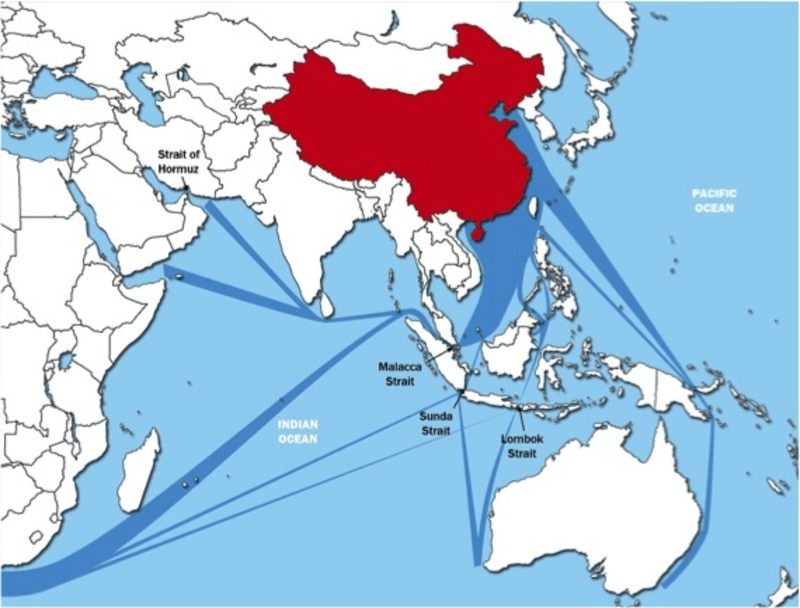
Image: CSBA: Shipping Lanes through the South China Sea.


The US has actually surrounded China with 400 military bases, bristling with strategic and tactical weaponry. It also has war-gamed out China’s key vulnerability: the chokepoint of the South China Sea. War in the South China Sea would disrupt $5.3 Trillion of China’s external trade and 77% of China’s oil imports[5]. In this scenario, the US does not have to win a shooting war with China in the South China Sea. The war just has to happen, and the disruption to trade could crash China’s economy. The map shows the shipping lanes that would be disrupted.


China’s first response to the US pivot and encirclement, especially in the South China Sea–its key chokepoint–was to build defensive military facilities along some of the islands, to deter US incursion and to raise the cost of interference. Its other response, much more ambitious, was the Belt & Road Initiative (BRI), which constitutes a long overland escape from the encirclement, similar to its “long march” during its encirclement by the fascist KMT. The BRI travels through SE Asia, then overland through Central Asia, to the Mediterranean, and then Europe and Africa. In particular:


+ CMEC (China-Myanmar Economic Corridor) travels through Rakhine State and exits to the Indian Ocean at Kyaukphyu port (bypassing the Strait of Malacca).


+ CPEC (China-Pakistan Economic Corridor) to Gwadar port transits directly to the Arabian Sea and the Persian Gulf.


+ Xinjiang is the key overland route for BRI to exit China to Central Asia, with Iran also a key node.


+ Djibouti at the horn of Africa is the entry node to Africa (the Sahel, and the South)


BRI as it does this, becomes the physical realization of Mackinder’s “heartland” in Eurasia—the pivot state connecting the “world island” into a single economic bloc, and raising China to the status of the key regional power, exactly what Brezinski and Wolfowitz, sought to prevent.


Image: Mercator Institute for China Studies: Belt and Road Initiative.


Mindful of this development, and aware of the rapidly ticking biological clock on US power, the US is currently rapidly escalating hostilities in the SCS, most recently with war games, U2 incursions, belligerent passages of aircraft carriers, guided missile destroyers, submarines; China’s response has been to launch “carrier killer” missiles into the region.


In December 2018, Rear Admiral Lou Yuan of the PLA Navy said, ‘What the United States fears the most is taking casualties,’ and suggested that sinking two US aircraft carriers would be sufficient to expel the US from the South and East China seas. ‘We’ll see how frightened America is.’

The authors say that using this concept of ‘offensive deterrence’ by conducting strikes that kill Americans or Australians would not have the deterrent effect the PRC seeks or expects ‘and the risks of escalation from such a deterrent effort are extremely high’.

So, they say, planners must take this into account both when seeking to deter China as well as when thinking through what actions it might take or how it might react to our actions.

In examining how China might be deterred from actions inimical to international goals and standards, the report contains various definitions of what deterrence actually is. One is that of strategist Thomas Schelling, described as the contemporary father of coercion theory: ‘To be coercive, violence has to be anticipated. And it has to be avoidable by accommodation. The power to hurt is bargaining power. To exploit it is diplomacy—vicious diplomacy, but diplomacy.’


Zhao Xijun of the PRC’s National Defense University defines ‘offensive deterrence’ in his book Coercive warfare: a comprehensive discussion on missile deterrence as ‘a military deterrence that mainly aims at attacking’ and writes that ‘the characteristic of offensive deterrence is to use “pre-emptive strike” to deter the other side’. Zhao also states that this concept is ‘“using war to stop war” by [using] small war to constrain large war’.

The authors compare the current situation to the way the US and the Soviet Union related to each other during the Cold War. Apart from contact at organisations such as the United Nations, the two sides had little interaction, little trade, little commerce and relatively little overlap in their geographical spheres of influence.

‘There was tension and conflict on the margins with clear escalatory potential, but the two sides managed to avoid direct or large-scale confrontations, albeit narrowly at times. That was in large part because the two sides developed a shared basic understanding of the world.’

Everyone in the military and the broader defence and security establishment knew something about the Soviets and their military. People studied what the Soviets thought, how they spoke and the actions that they took, down to the smallest details.

Each side developed a solid basis for understanding the signals the other side was sending, and typically sent clear signals of its own.

The authors say that that is not the case today.

‘The CCP’s understanding of the world, and thus its approach to it, is significantly different from Western views. It’s neither right nor wrong, just a different perspective, and one that isn’t common in Western liberal democracies; nor is it commonly taught in Western education systems, or indeed even in professional military education.’

They say that Australian and US partners and allies such as Japan, South Korea, Singapore and Taiwan have a historical appreciation and can help contribute to a better understanding of historical concepts. But, since 2001, the US and many of its partners have been focused on fighting terrorist groups and managing the conflicts in Iraq, Afghanistan and the broader Middle East.

Only during the latter part of the Trump administration did the US truly focus the whole of government on addressing the competition with China, bringing in Congress as well as the military, the State Department, the Committee on Foreign Investment in the United States and others.

While it takes years to build a deep and wide group of specialists in any field, the authors say, it stands out that the US Air Force has the same number of foreign area officer places for Chinese specialists as it does for Portuguese speakers.

They warn that if the US and its allies and partners hope to avoid conflict with China, they must build a deeper shared understanding of how the CCP and the PRC see the world. That will require sustained effort over several years and involve a deep partnership with partners and allies who have vital knowledge and expertise.

They also urge planners not to ‘mirror ourselves onto our analysis of PRC thinking and action’.


They say that: ‘With sustained effort, we can do better at understanding Chinese thought and concepts and the twists that CCP ideology gives them. In that way, we can maximise our opportunities to ensure that our strategic goals are met and our interests are protected.’