All over the world in different countries, cultures, tongues, and colors are people who have the same basic desire for happiness and respect from his fellow men. We are the same all over as members of the human race. If we honor each other's boundaries with propriety and consideration our voyage thru life can be rich in knowledge and friendship..........AMOR PATRIAE
PEOPLE AND PLACES
All over the world in different countries, cultures, tongues, and colors are people who have the same basic desire for happiness and respect from his fellow men. We are the same all over as members of the human race. If we honor each other's boundaries with propriety and consideration our voyage thru life can be rich in knowledge and friendship..........AMOR PATRIAE
Entire ghost town of Marsh Mill ILLUSTRATIONS AND PHOTOGRAPHS
1. The Miner's Sunday 2. A Sunday's Amusements 3. A Daily Pleasure 4. Occupation for Rainy Days 5. The Mountain Expressman 6. Residence and Farm of A. P. Chapman 7. "The Expressman Has Arrived" 8. Lodgings About 1855 9. Residence and Ranch of H. H. Kennedy, Goodyear's Bar, Sierra County, California 10. Hidden Treasure Mine, Sunny South, Placer County, California 11. Forty-Stamp Gold Mill 12. Cross-Section Forty-Stamp Gold Mill 13. Batea For Gold Mill 14. Battery Frame 15. Schematic View, Malakoff Diggings, Ca. 1880 16. English (Rudyard) Dam 17. Omega Mine, Washington Ridge 18. Truckee Hotel 19. Bear Valley Mill, Towle Brothers, Dutch Flat 20. Kearsarge Mill, Towle Brothers, Dutch Flat 21. M. L. Marsh Ox-Teams and Barns 22. M. L. Marsh Sawmill 23. Gold Lake Ranger Station, Ca. 1922 24. Sierra Valley Ranger Station, 1915 25. Logging Engine 26. Steam Donkey 27. Steam Donkey Yarding, Ca. 1900 28. Railroad Logging Engine, Cars; Loader in Background 29. Auburn Ski Club C.C.C. Camp 30. Sattley C.C.C. Camp 31. Temporary Logging Structure 32. Fir Camp, Forest Hill; 1924. Fire Fighter's Payday
MAPS
1. Tahoe National Forest 2. Ancient and Modern River System 3. Main Routes to the Gold Fields 4. Yuba Basin Mining Water Supply, 1850-53 5. Location of Gold Districts 6. Geologic Map of Sierra City and Johnsville Districts, Plumas Counties 7. Meadow Lake Mining District 8. North Bloomfield Area, Ca. 1875 9. Yuba Basin Hydraulic Mining Ditch System 1854-1884 10. Routes Across the Tahoe National Forest 11. Stagecoach Routes, 1902 12. Truckee Basin Logging Railroads (1868-1930) 13. Geologic Map of Alleghany District, Sierra County 14. P.G.& E. Facilities in the Yuba Basin, 1911 15. Tahoe National Forest - Cattle - 1915 16. Tahoe National Forest - Sheep - 1915 17. Tahoe National Forest - Grazing, 1939
Nevada County GenWeb Biography of Martin Luther Marsh
Marsh Mill is a historical town worth more than the asking price of $ 999,999. Includes a spring fed lake and 167 acres of rolling forested terrain. A plateau if you consider the hills surrounding the town.
Martin Luther Marsh and his brother Daniel photocopied from the 1895 Pictorial History of Nevada County.
The Marsh brothers were very prominent lumbermen in Nevada County. They partnered with A.B. Gregory in the 1860's to run the Old Pioneer Sawmill. It had been founded in the 1850’s on Little Deer Creek and encompassed the land now bounded by Nimrod, Nile and Clay Streets.
The above map is a detail from the 1871 Birdseye View of Nevada City which appears below.
Early newspapers mention a steam saw mill on Little Deer Creek owned by a “Russell and Hirst” in 1854 and owned by “Marsh, Palmer and Perry” in 1861. The sawmill and lumber operation of M.L. Marsh and A.B. Gregory on Nimrod Street in 1859 is shown on page 107 in the 1895 Pictorial History of Nevada County. (Marsh later removed his sawmill to another location on Boulder Street.) The 1864 Nevada County Assessor's roll shows the property as the Old Pioneer Sawmill of “A.B. Gregory.” Early tax assessments show stockpiles of lumber and 'working’ cattle on the property.
Martin Luther Marsh and his large family resided in the historic Marsh-Christie house on Boulder Street. He died 14 December 1911. His brother Daniel died 26 July 1921.
Judah had ignored the Truckee Route early on, leaning more toward a southern route near Tahoe, etc. I gather that his Doctor pal in Dutch Flat had much to do with the decision being made in favor of the Truckee Route, but then today I find something else! ...
Caleb Greenwood, the scout for the Stevens Party in 1844, found a way to bypass the upper Truckee Canyon in 1845. Known as the Dog Valley Section of the Truckee River Route of The California Emigrant Trail. From 1845 on it became THE route, basically a horseshoe detour from what is now Verdi, Nevada, to what is now Donner Lake, California. The Dog Valley Road would be nothing more than a part of the TRR until about 1852.
The northern mines of California, specifically the Yuba River country, and particularly the North and Middle Forks, were worked at early as June of 1848. Roads from Marysville and Sacramento had been established to the settlements of Camptonville, North San Juan, and Nevada (City), by 1849. Pack trails of course connected these settlements to the diggings on the North and Middle Forks of the Yuba. By 1852, the trails from Camptonville and North San Juan had been developed into passable wagon roads. They would meet and become one roughly three miles east of Forest (City). It would continue as one road through to what is now Verdi, Nevada. Jackson and Henness had built a road to their ranch, and Dr. Webber had built a road to his lake and hotel, so connecting the roads was an obvious thing to do. Emigrants traveling over the TRR by 1852, would branch off the TRR near what is now Stampede Valley (Dog Valley Road), and instead of heading south and west to Donner, would head west and a little north. I have numerous diary excerpts to verify this.
Diaries note that most went emigrants to Downieville, and a couple note that some companies went "south and west from Jackson's Ranch to Nevada City". (Not to be confused the Nevada City section of the Truckee River Route). ... That little jag to Nevada (City) is vital to the Judah connection.
In 1859, after gold was discovered in the Comstock, two different companies were formed to push freight and people to and from Virginia City, Nevada. The first was the "Truckee Turnpike Company". Organized in Marysville, the road actually began in North San Juan, as connecting roads from there and Camptonville already existed. The TTC was actually two roads, the NSJ road and the Camptonville Road. Current "topo" maps show the Camptonville route as the Henness Pass Road, but in truth the NSJ road was more heavily used. In reality, they are "bifurcations" as they joined as one just east of Forest (City).
The second company started in Nevada (City), and was known as the "Heness Pass Turnpike Company". The two roads of the TTC that became one after Forest (City), and the HPTC, all became one at Jackson Meadows, now the site of the Jackson Reservoir. From that point on, the road was known as "The Henness Pass Road", and the companies involved worked as one, under the name HPTC, through to Virginia City, Nevada.
Of interest to you initially would be the site of "Marsh Mill". This site sits directly on the HPTC route between Graniteville, (Eureka), and the site of Bowman House. Marsh Mill was of course owned and operated by Charles Marsh!
In 1864, yet another road connected into the Henness Pass Road system. Known officially as the Pacific Turnpike, it was also known as "Culbertson's Road". This road ran from Dutch Flat east to Bear Valley, then due north to Bowman House, where it connected to the HPTC road to Jackson Meadows, etc.
From a business viewpoint, let us look at Charles Marsh. His place sat roughly four miles west of Bowman House, directly on the HPTC road. The Pacific Turnpike intersected the HPTC Road at Bowman House. The Pacific Turnpike, A/K/A Culbertson's Road, was "owned" by yet another company, "The Nevada City Turnpike Company". The NCTC was basically the route of California #20, a heavily-used emigrant road in the 1850's. Both road connected at Bear Valley.
This is complicated, so please bear with me.
The Dutch Flat Tahoe Wagon Road, also started at Dutch Flat. Is that a coincidence?
...On the surface it appears that Judah and political as well as business allies were attempting to control wagon routes long before the existence of rail!
My point to all of this is that I have found newspaper accounts from the 1850's and 1860's of Marsh and Judah on the Henness Pass Road. It was a prime candidate, per the accounts, for rail. Marsh's interest should be obvious. Considering where rail was laid, and further considering the position of Charles Marsh in the grand scheme, what happened? I will send you the accounts of what I have if you are not aware of them.
... I was recruited to act as a scout, guide and mule skinner/teamster for the official California 150th celebration. The Missouri crew was short-handed when they reached Fernley, Nevada, and as I know the old wagon roads, I was drafted on the spot. Two weeks later, we arrived in Sacramento. We had four wagons, all Conestoga's almost thirty feet each in length. The wagons were built by Morris Carter using Smithsonian plans, right down to the brakes; being nothing more than a rope across the box to hook a bootheel into, etc.
The mules did not like the few times we hit pavement, once in Reno and once near Truckee. In Truckee, some motorist honked a number of times, and the mules of course "went south". The result was two runaway teams, one of course was mine! We all survived the mishap, two-leggers and four-leggers alike, but we had to layover below Donner Summit to do some wagon repair, shrink wheels, replace a broken tongue, etc. I had been thrown from the wagon during the mishap and had more than a few bruises."
ILLUSTRATIONS AND PHOTOGRAPHS
The Southern 70 acres version of El Capitan. Massive rock formation, hidden granite cliff on the left side covered by the trees
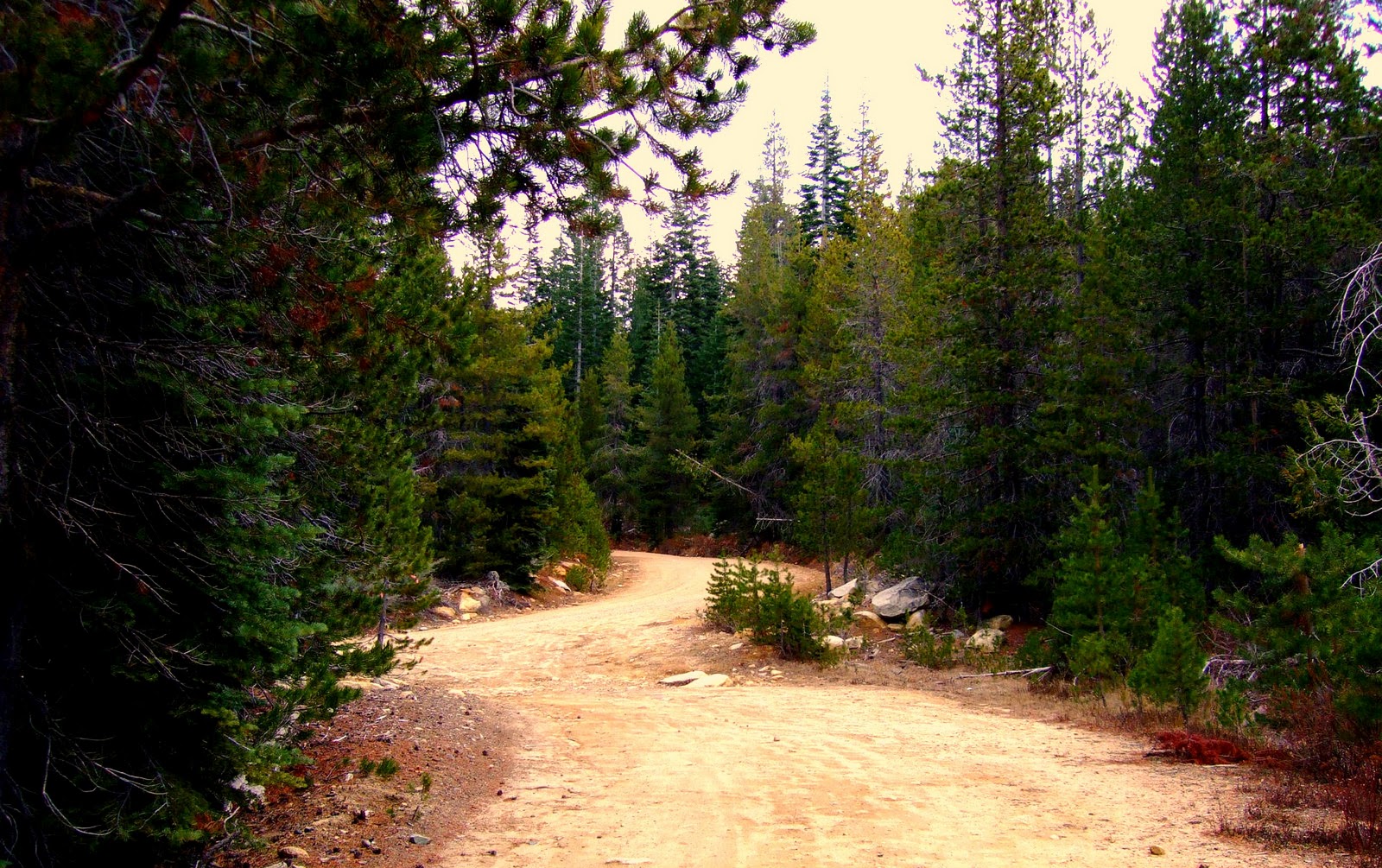
Marsh Mill Road Along Marsh Mill Road
Entrance to R/W Middleton Rd
http:// When the warm sun, that brings Seed-time and harvest, has returned again, 'T is sweet to visit the still wood, where springs The first flower of the plain. I love the season well, When forest glades are teeming with bright forms, Nor dark and many-folded clouds foretell The coming-on of storms. From the earth's loosened mould The sapling draws its sustenance, and thrives; Though stricken to the heart with winter's cold, The drooping tree revives. The softly-warbled song Comes from the pleasant woods, and colored wings Glance quick in the bright sun, that moves along The forest openings.
When the bright sunset fills The silver woods with light, the green slope throws Its shadows in the hollows of the hills, And wide the upland glows. And when the eve is born, In the blue lake the sky, o'er-reaching far, Is hollowed out and the moon dips her horn, And twinkles many a star. Inverted in the tide Stand the gray rocks, and trembling shadows throw, And the fair trees look over, side by side, And see themselves below. Sweet April! many a thought Is wedded unto thee, as hearts are wed; Nor shall they fail, till, to its autumn brought, Life's golden fruit is shed.
Whose woods these are I think I know.
His house is in the village, though;
He will not see me stopping here
To watch his woods fill up with snow.
My little horse must think it queer
To stop without a farmhouse near
Between the woods and frozen lake
The darkest evening of the year.
He gives his harness bells a shake
To ask if there is some mistake.
The only other sounds the sweep
Of easy wind and downy flake.
The woods are lovely, dark, and deep,
But I have promises to keep,
And miles to go before I sleep,
And miles to go before I sleep
PROPERTY IN FRANCE FOR SALE BY OWNER FOR $200,000 IN MONTAIGUT EN COMBRAILLE (in the Puy-de-Dômedepartment of Auvergne)
Renovattion of the house cost more than $ 120,000 ie. new roof $25,000, Brick Floors in family room $36,000 , reinforoced dumgeons and new wood in living floor, arch dungeons floor and spiral stairs $23,000, Finishing up like double pane windows, doors, utilities, $37,000, landscaping concrete work, $12,000 etc. Then antique furnitures, linen included. Living area of 2009 sq. feet, 3 bath and 3 bdr. Click here to see the full album of the houseFROM A MEDIEVAL HOME
As a child, I dream about traveling around the world especially in Europe and living there for for some months abd acquring their culture and language, I would need a house or a home base equidistant to the capitals of Europe. This dream was fulfilled later on above, in my retired years. However, I am done with traveling and will sell this house for a measely sum of $200,000 together with the antique fornitures, Click here to seeInside the house
THE LEGACY OF POPE FRANCIS AND THE ORIENTATION OF CARDINAL LUIS ANTONIO TAGLE TO BE ELECTED POPE
The heavy doors of the Sistine Chapel loomed, ancient and unyielding, as if guarding centuries of secrets. Beneath Michelangelo’s frescoed ceiling, the silence was thick with anticipation. Cardinals in scarlet robes moved with solemn dignity, each step echoing a sense of divine responsibility. Outside, the world waited — breathless, anxious, hopeful. The papal conclave of 2025 had begun. According to Church law, the cardinals would vote twice each day until one man received a two-thirds majority. That meant ninety votes. Ninety men had to agree — not on policies or platforms, but on a soul they believed could carry the weight of Peter’s keys.
Getty Images
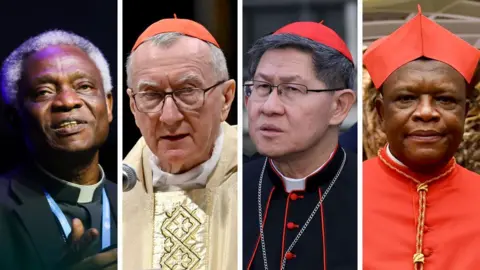
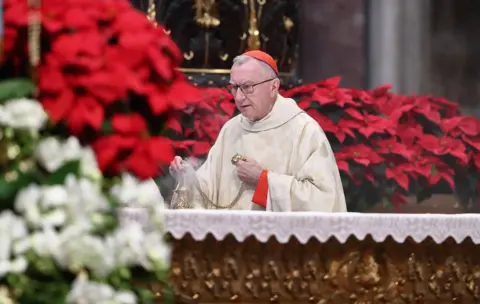
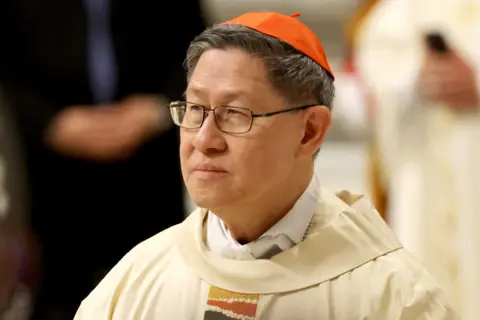
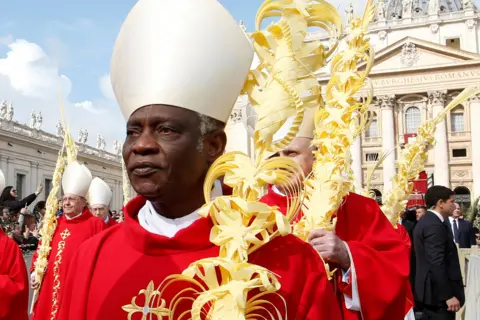
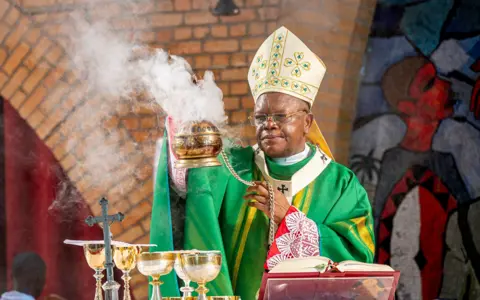
Pope candidates (left to right) Cardinal Peter Kodwo Appiah Turkson, cardinal Pietro Parolin, cardinal Luis Antonio Gokim Tagle, and cardinal Fridolin Ambongo Besungu Who will be the next pope? The decision will be made when the College of Cardinals begins meeting in conclave from 16:30 on 7 May in the 15th Century Sistine Chapel. It will involve 133 cardinals aged under 80, who will debate and then vote for their preferred candidate until a single name secures the support of two-thirds of them. With 80% of the cardinals appointed by Pope Francis himself, most are not only electing a pope for the first time, but will offer a broad global perspective. For the first time in history, fewer than half of those given a vote will be European. And although the college may be dominated by his appointments, they were not exclusively "progressive" or "traditionalist". Could the cardinals elect an African, an Asian or even an American pope, or might they favour one of the old hands of the Vatican administration?
Softly spoken Italian Cardinal Parolin was the Vatican's secretary of state under Pope Francis – making him the pope's chief adviser. The secretary of state also heads the Roman Curia, the Church's central administration. Having acted effectively as deputy pope, he could be considered a frontrunner. He is viewed by some as more likely to prioritise diplomacy and a global outlook than the purity of Catholic dogma. His critics consider that a problem, while his supporters see a strength. But he has been critical of the legalisation of same-sex marriage around the world, calling a landmark 2015 vote in favour in the Republic of Ireland "a defeat for humanity". Catholic watchdog organisation Bishop Accountability has accused Cardinal Parolin of "suppression of abuse information" being passed to secular authorities in his role as secretary of state.
The morning light crept gently over the dome of St. Peter’s Basilica on April 21, 2025, casting long shadows across the cobbled streets of Vatican City. For most, it was just another spring morning—soft, still, sacred. But inside Casa Santa Marta, the heart of the Catholic world prepared to stop. Pope Francis, the 266th pontiff of the Roman Catholic Church, breathed his last at precisely 7:35 a.m. His frail body, once full of quiet strength, had finally surrendered after a prolonged bout of bilateral pneumonia. His death did not come entirely unexpected. He had been in and out of the hospital since February, often canceling appearances, visibly weaker each time he addressed the faithful. And yet, when the moment arrived, it shook the foundations of Vatican City. The bookmakers may back him but Cardinal Parolin will be well aware of an old Italian saying that stresses the uncertainty of the pope-picking process: "He who enters a conclave as a pope, leaves it as a cardinal." Some 213 of the previous 266 popes have been Italian and even though there has not been an Italian pope in 40 years, the pivot of the upper echelons of the Church away from Italy and Europe may mean there Luis A
CHINA DEAL MADE BY CARDINAL PAROLIN
(Cardinal Joseph Zen: Why a Vatican-China deal will harm Catholics in China)
IS NOT ACCEPTABLE TO THE INTERNAL POLITICS OF THE CHURCH
There are thought to be around 10 million Catholics in China, the majority of whom worship in government approved churches. But many others do so in secret, in so-called "underground churches", which means the worshippers are often under surveillance and so never totally safe. "They can be arrested ... Not many [priests] are detained. Maybe two bishops and maybe a dozen priests. They don't want to have martyrs ... They have more improved methods to destroy the church. Like threats, like enticement ... blackmail ... The Communists are the law, they can do anything," says former Bishop of Hong Kong, Cardinal Joseph Zen. Despite the danger, they see themselves as the true followers of the Catholic church. In the official church in China, the pope's authority is not recognised, but that may be about to change. The Vatican and Communist Party appear to be close to making an historic deal, which would give Pope Francis a say in the appointment of bishops to China's official church. In exchange, the Vatican would recognise bishops ordained without the pope's approval. In effect, a recognition by the pontiff that the two churches should become one. The rapprochement between China's Communist Party and the Vatican is highly significant. China broke off diplomatic relations with the Vatican almost 70 years ago, following the Communist Party revolution led by chairman Mao. Now, two of the world's most secretive organisations are close to announcing a deal that will decide the future of China's Catholics. But the agreement has many detractors. One prominent critic, former Bishop of Hong Kong Cardinal Zen, has called it a betrayal, evil and a sell out. "How can you legitimise a schismatic church ... they are completely under the guidance of the government. The church doesn't change just because you legitimise all the bishops ... If all the bishops, or the majority of the bishops, are the slaves of the Communist regime, there is no improvement," says Cardinal Zen. He has never recognised the Chinese government's efforts to interfere in the church and therefore he travelled to the Vatican to warn the pope, face to face against any deal. "I said to him [the pope] "this is fake". Last word is not enough ... Practically you are giving the power in the hands of the government ... What do they [the Communist Party] know about the qualities required to be a bishop?" says Zen. "We're facing a disaster [if the Vatican establishes a representatives office in Bejing]. In the official church, those bad elements, those who really have no faith, that are just on the side of the government for their interest, those people now are happy ... they are being rewarded. The good people in the open church must be very disappointed ... They were waiting for the Holy See [Vatican] to give them courage. But the Holy See always encourages surrender, everywhere. Now, they give up their hope. With no agreement there can still be hope for change. But now, it's the legitimatisation of the wrong situation .... Many people in the universal church may lose their faith in the pope." Cardinal Zen talks to Al Jazeera about the challenges facing China's Catholics, the Vatican-China deal on appointing bishops, and his meeting with Pope Francis.
A discovery inside the Vatican Archives has shaken the Catholic world to its core, a private letter from Pope Francis to Cardinal Luis Tagle, lost for years, now finally exposed. What this letter reveals goes far beyond ordinary guidance; it hints at a hidden plan that could reshape the very future of the Church. As questions swirl and speculations mount, the real story lies not just in the words themselves, but in what they were meant to prepare.
Nationality: Filipino Age 67
LUIS ANTONIO TAGLE
Could the next pope come from Asia?
Cardinal Tagle has decades of pastoral experience – meaning he has been an active Church leader among the people as opposed to a diplomat for the Vatican or cloistered expert on Church law. The Church is massively influential in the Philippines, where about 80% of the population is Catholic. The country currently has a record five members of the College of Cardinals – which could make for a significant lobbying faction if they all back Cardinal Tagle. He is considered a moderate within the Catholic definition, and has been dubbed the "Asian Francis" because of a dedication to social issues and sympathy for migrants that he shared with the late pope. He has opposed abortion rights, calling them "a form of murder" – a position in line with the Church's broader stance that life begins at conception. He has also spoken against euthanasia. But in 2015 when he was Archbishop of Manila, Cardinal Tagle called for the Church to reassess its "severe" stance towards gay people, divorcees and single mothers, saying past harshness had done lasting harm and left people feeling "branded", and that each individual deserved compassion and respect. The cardinal was considered a candidate to be pope as far back as the 2013 conclave in which Francis was elected. Asked a decade ago how he viewed suggestions he could be next, he replied: "I treat it like a joke! It's funny." Although he did raise concerns about President Rodrigo Duterte's drug war deaths, critics suggest he could have been far more vocal on the issue. Some, including Philippines-based whistleblower priest, Father Shay Cullen, have criticised Tagle's handling of abuse perpetrators.
In a move that shocked the Vatican and reignited global prophecy, Pope Leo XIV has placed Cardinal Luis Antonio Tagle in a position of divine importance. Was this appointment just politics? Or was it prophecy finally unfolding—at the precise hour foretold in the hidden pages of Fatima, in the vision of the bishop in white, in the whispers of a shepherd from the East? Tagle's return to power isn't a coincidence. It’s a Heaven-ordained sign—a warning that the final events are accelerating, and the time for discernment is now. Stay vigilant. Watch the signs. Pray without ceasing. Because this may be the final Pope before the shaking begins. 🕊️ This is Lightbringer of God — where the voice of Heaven meets the hour of prophecy.
Robert Prevost
Getty Imagesnt Nationality: American Age: 69 Could the papacy go to an American for the first time? Chicago-born Cardinal Prevost is certainly seen as having many of the necessary qualities for the role. Two years ago Pope Francis chose Prevost to replace Marc Ouellet as prefect of the Vatican's Dicastery for Bishops, handing him the task of selecting the next generation of bishops. He worked for many years as a missionary in Peru before being made an archbishop there. Prevost is not just considered an American, but as someone who headed the Pontifical Commission for Latin America. He is seen a reformer, but at 69 might be viewed as too young for the papacy. His period as archbishop in Peru was also clouded by allegations of covering up sexual abuse claims, which were denied by his diocese.
Peter Kodwo Appiah Turkson
Reuters Nationality: Ghanaian Age: 76 If chosen by his peers, the influential Cardinal Turkson would likewise have the distinction of being the first African pope for 1,500 years. Like Cardinal Ambongo, he has claimed not to want the job. "I'm not sure whether anyone does aspire to become a pope," he told the BBC in 2013. Asked if Africa had a good case to provide the next pope based on the Church's growth on the continent, he said he felt the pope shouldn't be chosen based on statistics, because "those types of considerations tend to muddy the waters". He was the first Ghanaian to be made a cardinal, back in 2003 under Pope John Paul II. Like Cardinal Tagle, Cardinal Turkson was considered a potential pope a decade later, when Francis was chosen. In fact, bookmakers made him the favourite ahead of voting. A guitarist who once played in a funk band, Cardinal Turkson is known for his energetic presence. Like many cardinals from Africa, he leans conservative. However, he has opposed the criminalisation of gay relationships in African countries including his native Ghana. In a BBC interview in 2023, while Ghana's parliament was discussing a bill imposing harsh penalties on LGBTQ+ people, Turkson said he felt homosexuality should not be treated as an offence. In 2012, he was accused of making fear-mongering predictions over the spread of Islam in Europe at a Vatican conference of bishops, for which he later apologised. Fridolin Ambongo Besungu AFAdvertisement
Nationality: Congolese Age: 65 It's very possible the next pope could be from Africa, where the Catholic Church continues to add millions of members. Cardinal Ambongo is a leading candidate, hailing from the Democratic Republic of Congo (DRC). He has been Archbishop of Kinshasa for seven years, and was appointed cardinal by Pope Francis. He is a cultural conservative, opposing blessings for same-sex marriage, stating that "unions of persons of the same sex are considered contradictory to cultural norms and intrinsically evil". Though Christianity is the majority religion in the DRC, Christians there have faced death and persecution at the hands of jihadist group Islamic State and associated rebels. Against that backdrop, Cardinal Ambongo is viewed as a fierce advocate for the Church. But in a 2020 interview, he spoke in favour of religious plurality, saying: "Let Protestants be Protestants and Muslims be Muslims. We are going to work with them. But everyone has to keep their own identity." Such comments could lead some cardinals to wonder if he fully embraces their sense of mission - in which Catholics hope to spread the Church's word throughout the world.
Peter Erdo Reuters Nationality: Hungarian Age: 72 A cardinal since the age of 51, Peter Erdo is highly regarded in the Church in Europe, having twice led the Council of European Bishops' Conferences from 2006 to 2016. He is well known among African cardinals and he has worked on Catholic relations with the Orthodox Church. The archbishop of Budapest and primate of Hungary grew up in a Catholic family under communism, and he is considered a potential compromise candidate. Erdo played a prominent role in Pope Francis's two visits to Hungary in 2021 and 2023, and he was part of the conclaves that elected Francis and his predecessor Pope Benedict. His conservative views on the family have found favour with some parts of the Church and he has navigated the "illiberal democracy" of Hungarian Prime Minister Viktor Orban. During Europe's migrant crisis in 2015, he said the Church would not take in migrants as it was tantamount to human trafficking.
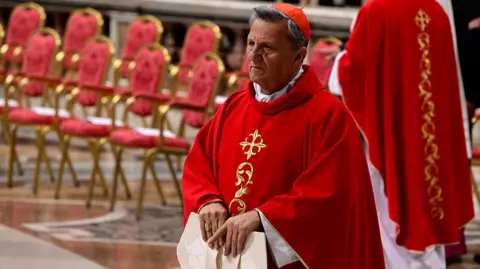
Mario Grech
Tiziana FABI/AF
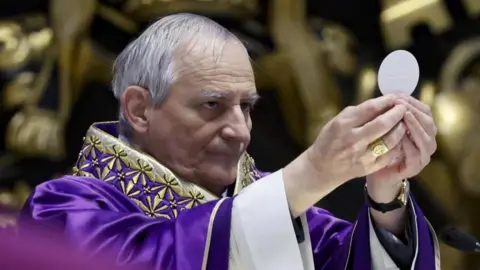
Nationality: Maltese Age: 68 If cardinals are looking for a candidate who will advance one of Pope Francis' key goals – to place more power in the hands of rank-and-file Catholics – they may look to Cardinal Grech. Pope Francis made him secretary general of the Synod of Bishops in 2019. In that role Cardinal Grech became instrumental in helping set in motion the Pope's vision of feeding the opinions of individual believers around the world into the Church's governance. Like the Pope he worked closely with, Grech is known to have been on a journey in regards to the way he views social issues. He has changed his tone on homosexuality over the past decade, declaring that Francis' endorsement of same-sex civil unions was a "storm in a teacup".t Matteo Zuppi EPA-EFE/REX/Shutterstock Nationality: Italian Age: 69 The Archbishop of Bologna grew up in Rome and soon became part of the Sant'Egidio Community, a charity that focuses on the poor and the marginalised. He helped mediate the end of Mozambique's 15-year civil war in 1990, and took part in further mediation efforts in Guatemala and Burundi. Made a cardinal in 2019, he was chosen by Pope Francis - ahead of his secretary of state Pietro Parolin - to act as envoy after Russia's full-scale invasion of Ukraine. He travelled to Kyiv and Moscow and sought the release of 19,000 Ukrainian children taken to Russia. He wrote the introduction to a 2018 book that called on the Church to improve its relationship with LGBT Catholics. His closeness to Francis may ultimately count against him in the conclave.
Joseph Tobin
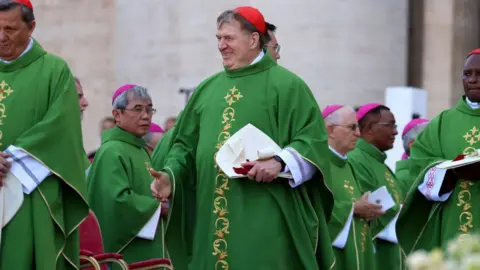
Getty Imagest Nationality: American Age: 73 Born in Detroit as the eldest of 13 children, the Archbishop of Newark is well known and popular among cardinals. Although he is considered a staunch supporter of Francis' views on offering a more open and welcoming Church, he is seen as a unifying figure. He has in the past deplored political polarisation in the US, warning against divisions in the Church too. In recent years he has said the Church should welcome same-sex couples and said he does not see a "compelling theological reason why the Pope couldn't name a woman cardinal". Appointed by Pope Benedict as deputy head of the Vatican office that works with religious orders and their congregations, Tobin also led a religious congregation called the Redemptorists. He was named as archbishop in Indianapolis, before Francis made him cardinal.
Angelo Scola
Getty Images Nationality: Italian Age: 83 Only cardinals under 80 can vote in the conclave, but Angelo Scola could still be elected. The former Archbishop of Milan was a frontrunner in 2013 when Francis was chosen, but he is thought to have fallen victim to the adage of entering the conclave as Pope and leaving as cardinal. His name has resurfaced ahead of the conclave, because of a book he is publishing this week on old age. The book features a preface written by Pope Francis shortly before he was admitted to hospital in which he said "death is not the end of everything, but the beginning of something". Francis's words show genuine affection for Scola, but the college of cardinals might not see his focus on old age as ideal for a new pope.
Reinhard Marx
Getty Images
Nationality: German Age: 71 Germany's top Catholic cleric is also very much a Vatican insider too. The Archbishop of Munich and Freising was chosen as an adviser when Francis became pope in 2013. For 10 years he advised the Pope on Church reform and still oversees financial reform of the Vatican. He has advocated a more accommodating approach towards homosexuals or transgender people in Catholic teaching. But in 2021 he offered to resign over serious mistakes in tackling child sexual abuse in Germany's Catholic Church. That resignation was rejected by Francis. Two years ago he left the Council of Cardinals, the Pope's most important advisory body, in what was seen in Germany as a setback for his career in the Church.
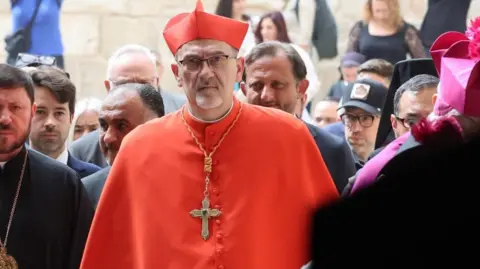
Pierbattista Pizzaballa
EPA Nationality: Italian Age: 60 Ordained in Italy when he was 25, Pizzaballa moved to Jerusalem the following month and has lived there ever since. Pope Francis made him Latin Patriarch of Jerusalem five years ago and later cardinal, and Pizzaballa has spoken of the city as "the heart of the life of this world". Fellow cardinals will have been impressed by his deep understanding of Israelis and Palestinians and the ongoing war in Gaza. However, his relative young age and inexperience as a cardinal may count against him, as could his affinity to Francis among cardinals seeking a change in direction.
Marc Ouellet
Reuter Nationality: Canadian Age: 80 Cardinal Ouellet has twice before been seen as a potential candidate for Pope, in 2005 and 2013. For years he ran the Vatican's Dicastery for Bishops, which chooses candidates for the episcopate around the world, so he has played a significant and formative role in vetting the future members of the Catholic hierarchy. As another octogenarian, he will not be able to play a part in the conclave itself, which may hinder his chances. Ouellet is viewed as a conservative with a modern outlook, who is strongly in favour of maintaining the principle of celibacy for priests. He opposes the ordination of women priests, but he has called for a greater role for women in running the Catholic Church, saying that "Christ is male, the Church is feminine".
Robert Sarah
GUY PETERSON/AFP Nationality: Guinean Age: 79 Well-liked by conservatives in the Church, Cardinal Sarah is known for his adherence to doctrine and traditional liturgy and was often considered opposed to Pope Francis's reformist leanings. The son of a fruit-picker, Sarah became the youngest archbishop aged 34 when Pope John Paul II appointed him prelate in Conakry in Guinea. He has had a long and impressive career, retiring in 2021 as head of the Vatican's office that oversees the Catholic Church's liturgical rites. While not considered a favourite for the papacy, he could attract strong support from conservative cardinals.
Jean-Marc Aveline
Franco Origlia/Getty Images Nationality: French Age: 66 Not since Gregory XI died in 1378 has there been a French pope. Although born under French colonial rule in Algeria, Aveline grew up in France's second city Marseille, where he later became archbishop. He has been outspoken on avoiding "criminalisation of immigrants as the cause of all evil", chiming very much with Francis's focus on migrants. Aveline also set up an Institute of Science and Theology of Religions in Marseille and promoted dialogue with Islam and Judaism. He has spoken out against one of Marseille's biggest problems, drug trafficking networks. Considered close to Francis, two years ago he brought the Pope to Marseille for a brief visit. Although he speaks Arabic, one potential drawback is that he does not speak fluent Italian.
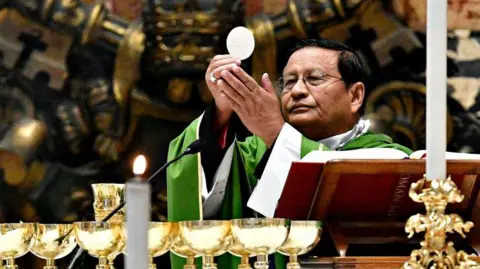
Charles Maung Bo
Vatican Pool/Getty Images Nationality: Myanmar Age: 76 Another Asian cardinal with strong credentials for the papacy, Bo was brought up in a large family by his mother in a country where only 1.3% of the population are Catholics. Born in the northern Sagaing region, Cardinal Bo has seen for himself the conflict that has ravaged Myanmar. He led Asia's bishops for two terms and was considered close to Francis, who named him as Myanmar's first cardinal and became the first pope to visit the country in 2017. He spoke out over the plight of the Rohingya Muslims who were forced to flee the military in Rakhine state, and said Myanmar should celebrate its diversity . Michael Czerny Who will be the next pope? Key candidates in an unpredictable process
Their choice could have a profound impact on the Catholic Church and the world's 1.4 billion baptised Roman Catholics, and it is harder than ever to predict who it will be.
ANGELO CARCONI/EPA-EFE/REX/Shutterstock
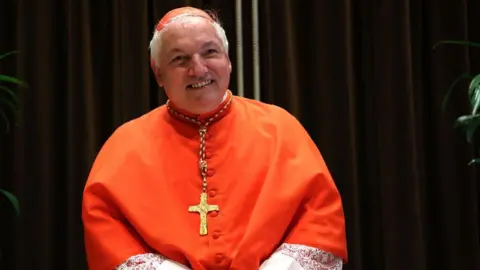
Nationality: Canadian
Age: 78
Cardinal Czerny was appointed cardinal by Pope Francis and is like him a Jesuit, a leading order of the Catholic Church known for its charitable and missionary work around the world.
Although he was born in the former Czechoslovakia, his family moved to Canada when he was two.
He has worked widely in Latin America and in Africa, where he founded the African Jesuit Aids Network and taught in Kenya.
Czerny is popular with progressives in the Church and was considered close to Pope Francis. He is currently head of the Vatican's Dicastery for Promoting Human Integral Development.
During the pre-conclave period he has warned against calls for "unity" from traditionalist cardinals, suggesting what they really mean is a "reversal" of reforms introduced by Pope Francis.
Although a strong candidate, it seems unlikely the cardinals would choose a second Jesuit pope in succession.